

The Creative Migration

For almost eighteen years, I have built my writing around a piece of advice from Seth Godin, written long before I ever had the chance to meet him. He said that when you cannot say a thing, you should sit down in front of a blank screen and write whatever arrives, and keep writing until the work itself turns around and shows you the point you were trying to reach. Once that point has surfaced, you go back to the top of the page and delete the first paragraph, because that opening was only ever written for you, and everything that follows belongs to the reader.
So that has become my ritual. I write my way into a long, shapeless mess, find what I actually mean somewhere in the middle of it, and then climb back to the beginning and remove the part that got me there. The opening paragraph never survives. It is the most human stretch of anything I write, the part where I am stumbling around in the dark, feeling for the thread, and it is the one part I never allow anyone to see. I delete the version of me that was still searching, and I keep the polished version that I want you to see, the authored, considered and clever me.
I think about this the way I think about those TikTok videos a certain kind of parent makes, where they tell their small child there is one full minute to swear as freely as they like into the phone, that the room is empty and private and nobody at all is listening, swear all you like and get it off your chest, when none of that is true. Of course, every one of us is listening, and our listening is the entire point, because the footage exists so that strangers can gather and laugh at a small child shouting the word fuck thirteen times into a phone in the belief that they are alone. As we watch, we push the numbers higher with our attention, and the higher numbers tell the parent to do it again to make another one, and beneath the laughter sits a child who will inherit all of it in ten years, who may decide they never wanted any of it. Yet, I keep watching anyway, and that is the part I find hardest to sit with.

My own writing operates under the same gentle illusion. I tell myself that the work is private, that this is only me thinking out loud, and then I hand it to anyone with a screen to digest and read. Of course, anyone could be one or 100,000; how do we know who will ever read it? You get to see the parts I judged worthy of being seen, and to drag them up to that standard, I lean on the very tools I spend so much of my time distrusting (Metaverse, AI, Google), which is a quiet hypocrisy I have made an uneasy peace with.
The whole way through, there is a voice insisting that this piece is the worst thing I have ever written. That voice conveniently forgets every piece that ever worked, and tells me nobody will read this, and that the ten hours I spent emptying my convictions onto a screen are time I will never recover. I have started to wonder whether thoughts left sitting inside a person do more harm than thoughts sent out imperfectly into the world, and whether the people I love, my wife and my children, my friends, are better served by a side of me that says the quiet things aloud. So I send them out, without much confidence, into a silence I can only assume is paying attention.
All of that doubt reversed itself, at least for a moment, last Monday when I was standing in front of my design students at the University of New South Wales. I had said something offhand, one of those disposable opening lines I would ordinarily delete, and the entire room lifted its eyes to me at once. Twenty-six students all lowered their screens, turned toward me, and waited for whatever might come next.
I let the silence hold for close to thirty seconds, which sounds like almost nothing until you are the one standing inside it. Thirty seconds is long enough to carry a basketball the full length of the court, to move it through six or seven pairs of hands and finish at the rim, and I stood in the calm for that entire stretch before I gathered myself and began my mini 26-person TED talk about agency and influence.
I have spent 20 years working in design, and what I am coming to learn is that my industry is exhausted and quietly afraid. It is facing more change than it knows how to absorb, change arriving from artificial intelligence, from technology, from a culture evolving beneath it, and, most of all, from the students in the room, the 26 epic humans in front of me, and the simple and unstoppable fact that a new person walking through the door changes things.
The most valuable thing in that room is the students themselves, worth more than the software they had been taught or the portfolios they had assembled. They hold the freedom to decide what they get to make, who they get to make it for, and what they would refuse to make. That freedom is agency, and agency is the only force that has ever shifted a tired industry. A new person arrives, carrying ideas the existing system never accounted for, and the system is forced to bend a little to hold them, and in that small act of bending, the shape of the whole thing changes. They alter the place simply by entering it.
As with anything critically important, we are all born with agency, but it is the easiest thing in the world to lose. I don’t think anyone arrives to take it from you in a single decisive moment. It disappears slowly, removed by the same tired industry these students are walking into to change, one reasonable compromise at a time, until a person who came through the door full of their own ideas is spending their days delivering somebody else’s idea. The first paragraph gets deleted, and not always by choice, and this time the stakes are considerably higher.
Marty Neumeier describes the five meta-skills that keep us recognisably human: feeling, seeing, dreaming, making, and learning. He sets these against a curve that drags our work from the deeply creative toward the merely skilled, then toward the rote, and finally toward the robotic, at which point a machine quietly takes it over. The work that remains ours, the work that still feels unmistakably alive, sits inside a narrow band he calls flow. When our skill runs ahead of the challenge in front of us, we drift into boredom; when the challenge runs far ahead of our skill, we are pulled into anxiety. Flow is the slender space between the two, where effort and ability are matched and the hours seem to disappear. That space, and the vital friction required to stay inside it, is the territory the book I am slowly writing keeps coming back to. I will leave the book there for now, but it matters here because that friction is exactly what an exhausted industry and a smoothed-out society are trying so hard to delete.
What happens to those students as they cross from the studio into the working world happens to me too, every time I travel into a country I do not yet understand. You misread the rules at first, you cannot tell where any of it is heading, and then the place begins, slowly and without asking your permission, to rearrange something inside you, so that you come home carrying ideas you did not have when you left.
The United States has done this to me more thoroughly than anywhere, and New York made the point more bluntly than the rest. On one of my first trips, I trod over a dead body on a subway platform, walking past it under police escort just to board my train. In those early working months, I would lose myself underground for hours, unable to make the lines join up in my head. The New York I had been handed growing up was gangs and crime, a place to be survived. But if you push through that initial disorientation, the place reveals itself. The New York I know now is breakfast with friends in Brooklyn and Manhattan, the lines and the shortcuts long since memorised, and a train out to Queens for the tennis. What sat underneath the grit the whole time was connection and community, and these days the city simply lights me up.
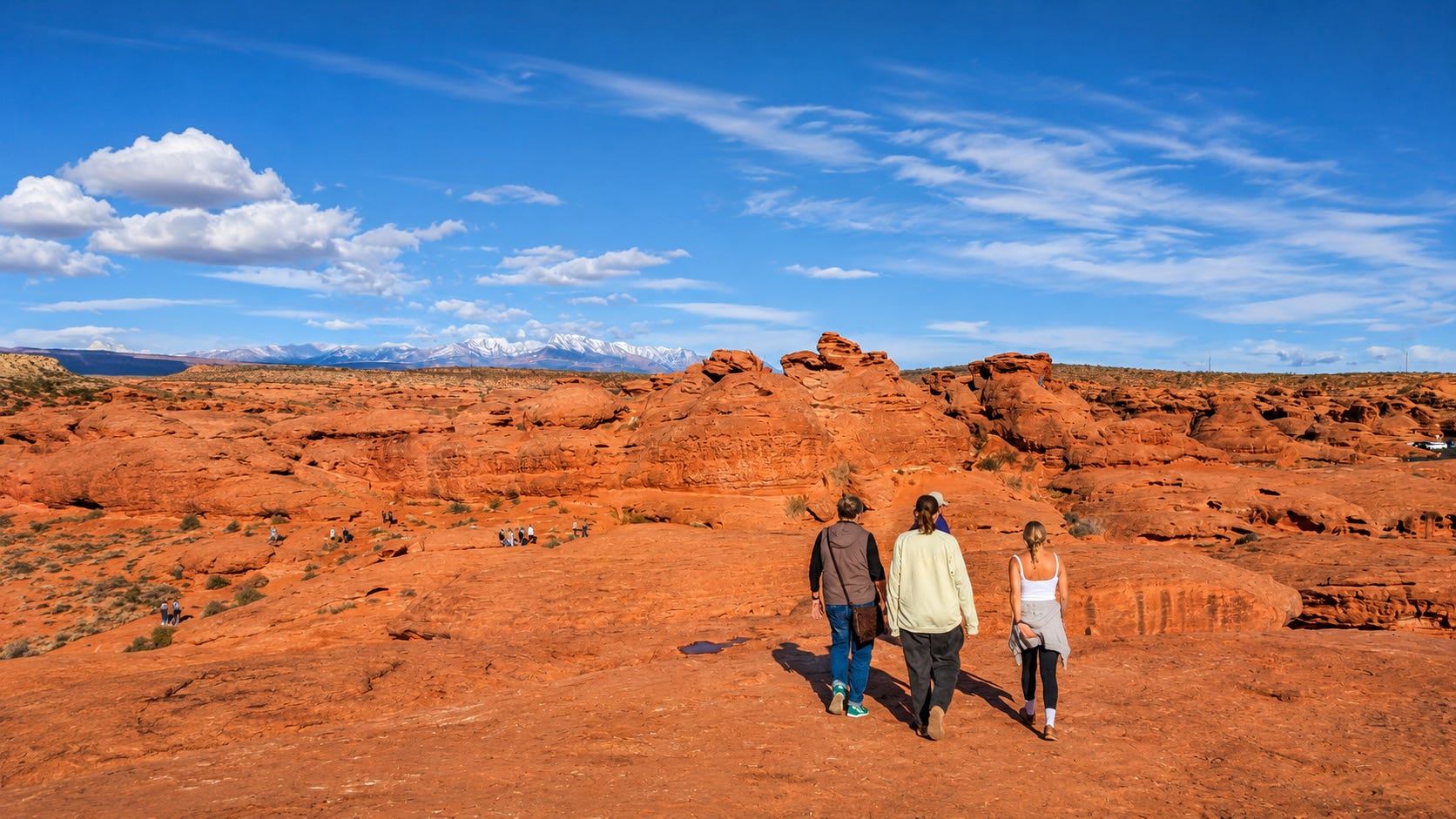
To my friends back in Sydney, Salt Lake City is a Netflix documentary and a punchline about plural marriage. The reality I is that it SLC is one of the most connected communities of people I have ever met, the kind who will have your back no matter what, whether or not you ever think to ask. Nebraska is a little less complicated. The picture in my head was cornfields, and when I drove across it, I found that the picture was the whole truth, because it really is cornfields, all the way out to the edge of the sky. And when I sat beside Lake Tahoe for the first time, and the water was so clear that it reset how I think about my responsibility to a planet I happen to share.
Every one of those places has left its influence on me, and the reason Nicola and I eventually started a small climate charity was the unfashionable conviction that the planet is worth saving and that design has a real part to play in saving it. We come back from these journeys altered, carrying ideas across borders in our luggage, which is precisely what international students do when they bring entire histories into an Australian lecture theatre. Allow enough different people into a single room and the imagination inside it begins to compound, each new history multiplying against the others, and as that imagination compounds, so does everything we eventually become capable of building.
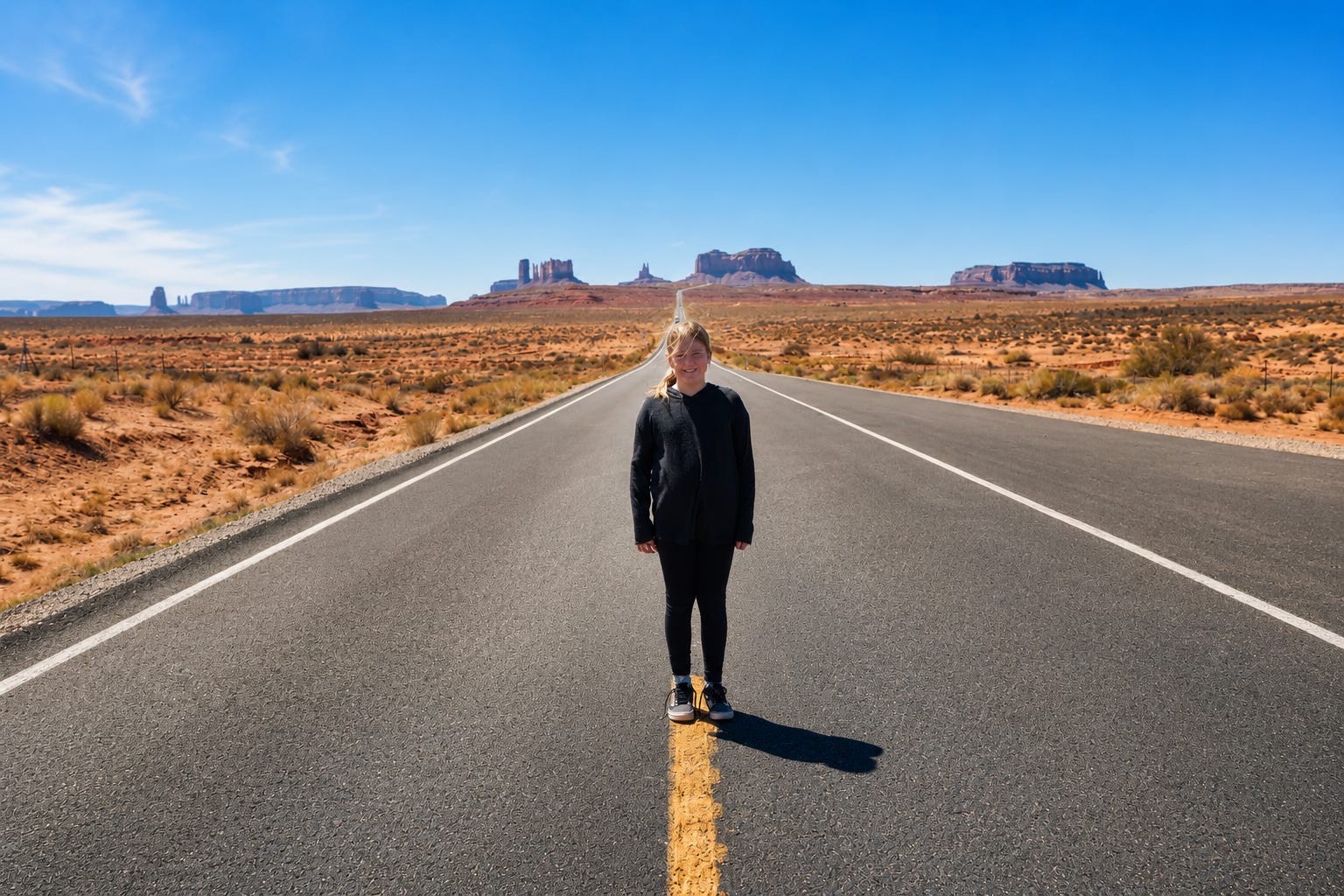
But any honest conversation about what we are capable of building here has to reckon with what was already built. Long before there was a modern Australia or a colonial America, this continent was home to people who had lived here for an unbroken span of time the mind struggles to understand. First Nations communities tended this land for tens of thousands of years with a sophistication in design and stewardship that our contemporary frameworks have yet to really understand. The immigrant story I am about to celebrate, my own family’s story of arrival and revival, rests directly on top of their violent displacement. I do not get to hurry past that fact to reach the more comfortable part of the page, because sitting inside that discomfort is the only honest place from which to imagine a different kind of country.
The country I find myself imagining begins with sixty-five thousand years of people tending this place across hundreds of generations, treating the land as something they belonged to and were answerable for, thinking seven generations into the future while the rest of us struggle to see past the next election cycle.
During Melbourne Design Week, I had the privilege to see one of my favourite designers, Alison Page, describe a world she would design for the year 2100. She was speaking as part of the Symbiocene, a framework that envisions a future in which human culture and enterprise actively restore the natural world rather than deplete it. In Alison’s vision for the turn of the century, she described an Australia led by an Indigenous Leader. Alison left the room with a gentle warning: if we want a creative, just, and innovative country, we have to look to immigration as part of the solution (quoting Alison from memory here, not verbatim, but I am on the right vibe and on the right path).
Alison’s conviction gives me the confidence I often need at dinner parties when I find myself advocating for the exact same thing. I married an immigrant from Britain. My children are the descendants of immigrants and first nations. My mother is a descendant of immigrants, and my father’s history is a complex mix of both immigrant heritage and the profound, lingering scars of the Stolen Generation.
We all come from somewhere. And just like the things we sit down to write or design, our ideas are shaped by our past, but the work itself is what shapes our future.
Set that immigrant story of rebuilding a life from nothing alongside the deep continuity of First Nations stewardship, and you uncover a cultural engine that exists nowhere else on earth. You honour the oldest custodianship in the world, you keep opening the door to the people who are still arriving, and you assemble a society with care and contribution as its organising principle.
The path we appear to be drifting down instead is the older and smaller one. It wears the face of cheap importation of nationalism, and it dresses itself up as the protection of something precious. Underneath the costume, it runs entirely on fear, on the conviction that there will never be enough to go around, that the gates must be raised and the identity held frozen, singular, and small. But creativity (and innovation) has always required the opposite conditions to survive. Every idea worth having is born in the friction of different languages, histories, and worldviews landing in one place and being forced to work each other out. Close the borders, and the culture flattens, and the difference that kept it alive is quietly erased.
There is that word again, the same instinct toward erasure that keeps reappearing once you have learned to notice it. We delete the humaness of the first paragraph. We allow an industry to quietly strip a young designer of their agency. We carry on as though the first sixty-five thousand years of this continent simply never occurred and we are told that the safest thing a nation can do is shut difference out at its border.
Every one of these is the same movement performed at a different scale, the steady smoothing away of every irregularity until the thing we were trying to protect is no longer alive.
Leaving the country of your birth is the most demanding brief a human being can take on, because you arrive in a place that makes no sense to you, unable to read its systems, and you are required to rebuild an entire life and an entire web of relationships from nothing, with no guarantee that any of it will hold. That experience leaves a lasting effect on a person. It builds a resilience and an inventiveness that is difficult to manufacture any other way, and it leaves the new arrival willing to look at a broken local system and ask the obvious question that nobody born inside it can see anymore, because they were never taught the unspoken rule that the question is not to be asked.
You can feel the result in almost any city that pays attention, in the businesses that get founded, the science that gets solved, and the food and music that appear from somewhere new to slowly change the texture of a place. The numbers turn out to be far less abstract than the politics would have you believe. Close to a third of all small businesses in this country, north of six hundred thousand of them, are owned by migrants. Research commissioned by CGU in 2017 found that these businesses earn revenue more than 50 per cent higher than their non-migrant counterparts, while employing well over 1 million Australians. Refugees, the very people we are so often taught to picture as a drain, turn out to be almost twice as likely to start a business as the population already here, according to the Centre for Policy Development.
This compounding effect works at every scale. When economists at Stanford and Harvard traced nearly nine hundred thousand American inventors for the National Bureau of Economic Research, they found that immigrants, despite making up only sixteen per cent of those inventors, were behind almost a quarter of the country’s patents. More importantly, once you account for the way they quietly lift up the people working beside them, they were responsible for more than a third of the country’s overall innovative output. A country that only ever speaks to itself will, in time, run out of things worth saying, while a country that keeps letting the world in is never quite permitted to grow predictable.
Strip away the politics entirely, and people move for the same reason that everything alive moves: the search for ground where the people they love might finally grow. Some are running from a climate that has turned against them, some are running from a war, and some are simply looking for a place that will let them author their own lives. That impulse is far older than the idea of a passport and far stronger than any wall anyone has ever troubled to build, and in the long run it always prevails, because there is no legislation capable of overruling a pulse.
So this is the migration that holds my attention, and it is a far larger thing than the version made of boats, visas, and borders. There is a quieter migration running beneath that one, occurring at every scale at the same time, in the student stepping into the industry, in the traveller returning home rearranged, in the writer releasing private thoughts into an uncertain silence.
All of us are moving toward the work, carrying our differences with us as we go, and quietly refusing to let anyone delete them on the way in.