

Higher Ground
Creativity is older than the industry that claims it, and more yours than you have been told.

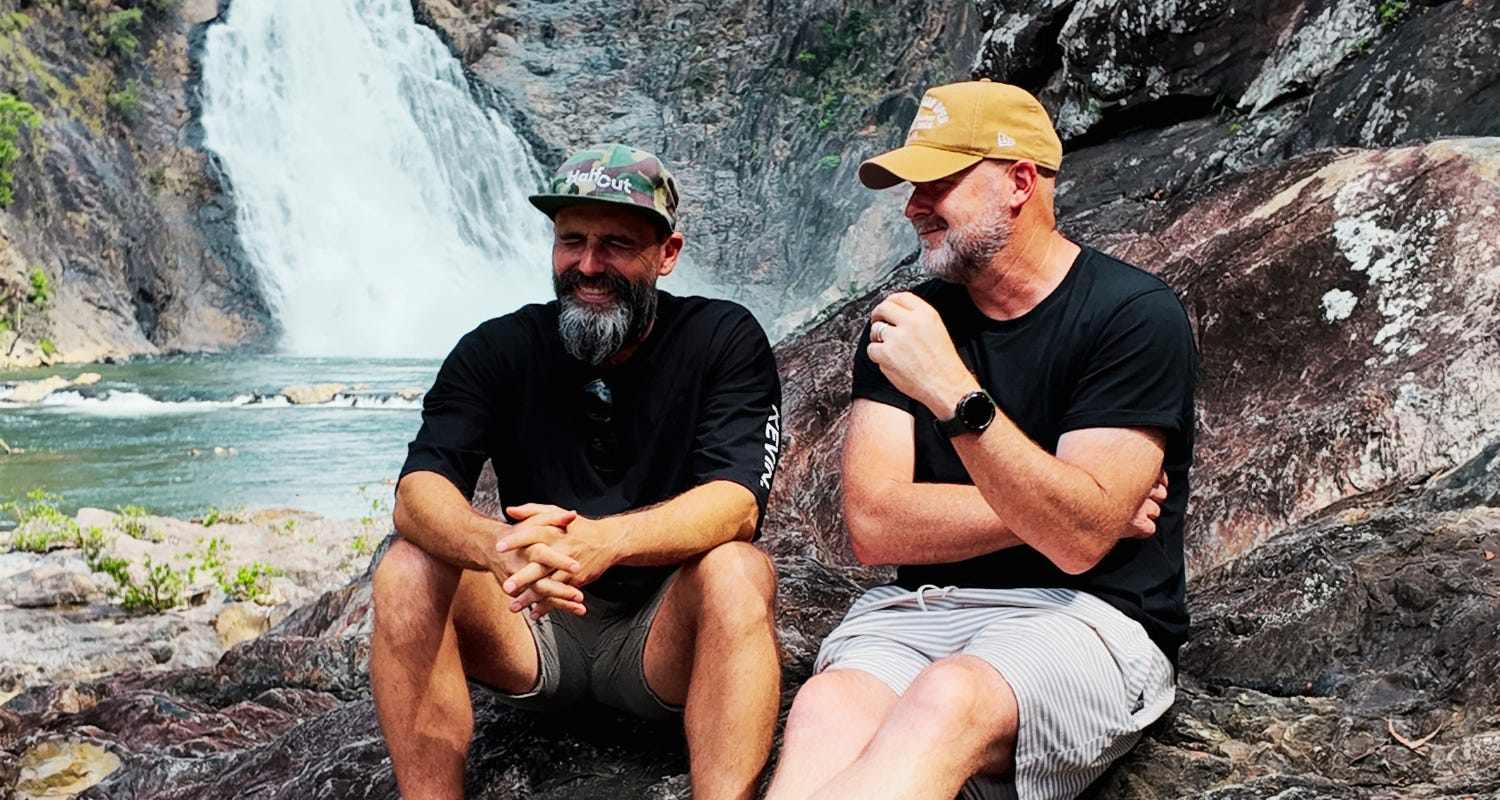
There is a 40-metre waterfall north of Cape Tribulation called Bloomfield Falls. The Kuku Yalanji people call the country Wujal Wujal (Many falls). I stood at its base last week with my daughters, Miff and Pip, and listened to Traditional Owner and Elder, Aunty Kathleen Walker, share her story of Wujal Wujal and her people.
Aunty Kathleen reminded me of my mum when I was small. The same way of watching over you, the same instinct to give you fair warning before you walked into something you couldn’t see coming. My mum did it for our family. Aunty Kathleen does it for country, pointing at the trees and the river and the mountain, the way my mum used to point at the world for me when I was a boy.
She told us how the country feeds itself. The clouds gather over the mountain, the rains come, the rains feed the river, the river feeds the country, and the country feeds the people. Sixty thousand years of the same conversation, repeated every wet season, in language that does not need a slide deck.
Then, in December 2023, a different cloud came over the mountain.
Aunty Kathleen pointed at it as she told the story. A black cloud, she said, that brought angry rain. They thought it was the season being heavy because they had never seen this kind of danger before. The hawk was circling and giving a warning, but the warning was for something the country did not yet have a language for.
The river burst its banks. Cyclone Jasper, the most destructive storm the Daintree had ever seen, took people from their homes and places from the map. People were stranded on rooftops and evacuated by helicopter. The water rose to a height nobody had recorded in living memory.
The wounds are still evident when you walk through Wujal Wujal today. The town is still rebuilding.
Now, Aunty Kathleen says, when the black cloud comes over the hill, we take higher ground.
“Because the country is angry”, she said.
What Aunty Katheleen is doing, when she tells you that, is the same thing a climate scientist does when they read a satellite image. She is reading the data she has access to, drawn from a record longer than any university has ever held. Sixty thousand years of observation deserve a better word than folklore. It is the longest continuous environmental dataset on this continent, kept on country, in story, by people whose entire knowledge system was built to notice change at this scale. The science we are now scrambling to publish in journals is, in many cases, catching up to what was already known.
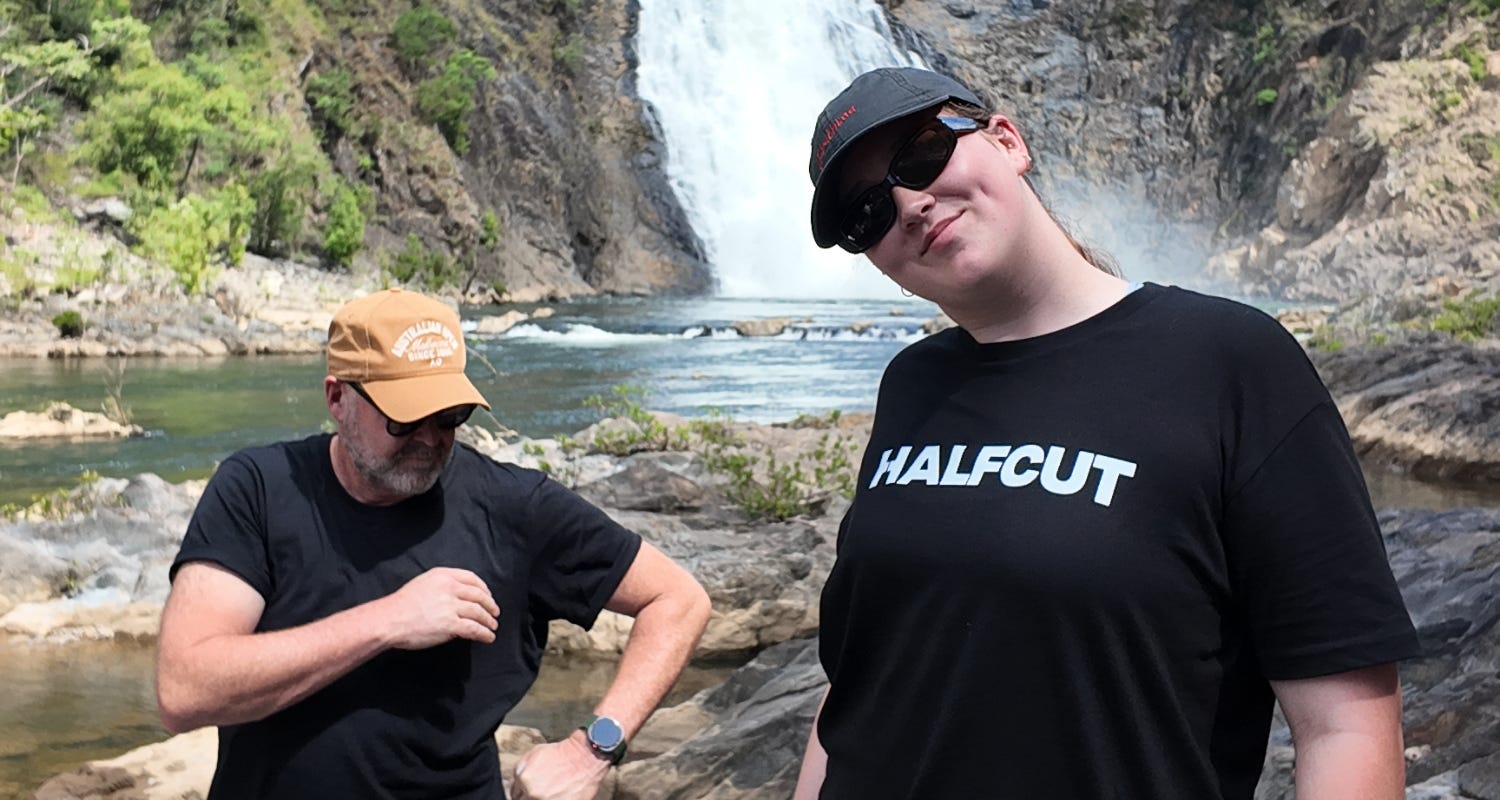
I was there last week with Halfcut, the Australian charity buying back rainforest acre by acre and returning it to Kuku Yalanji country. They have already protected over 50 hectares of one of the oldest living ecosystems on Earth, without designing a single thing. They have done so by paying for what was taken and returning it.
I kept thinking about the conference rooms I had found myself in over the past 20 years, discussing this Country.
For most of my career, I have watched the global design industry sell innovation. Sticky notes on glass walls, five-day sprints, frameworks named after diamonds and circles, confident creatives in expensive sneakers explaining to a room of executives that creativity is a process you can install. I have been the man in the sneakers, and I know how the slide deck ends.
And the entire time, sitting just north of where most of those decks are written, is a 180 million-year-old design system that has been running uninterrupted, quietly noticing everything, and now warning us through Aunty Kathleen, through the hawk, through the black cloud over the hill, that the weather is changing.
Here is what I have been turning over since I came home.
The design industry I have worked in for twenty years was built on a particular story about creativity. The story goes that creativity is a problem-solving tool, something you apply to a brief, something that produces an outcome a client can sign off on. We have spent decades industrialising it, writing books about it, developing methodologies for it, and selling it to corporations as a productivity asset. It has made many of us comfortable lives.
But that story is too small.
What Aunty Kathleen was sharing with us in Wujal Wujal is creativity. It is the original version of creativity, the long act of attention paid to a place by people who built their entire knowledge system around the question of what country needs in order to keep being country. That is design at its most serious, creative practice at the largest scale humans have ever attempted, and it has been working without interruption for longer than every civilisation on earth has existed.
When I look at it that way, modern design thinking starts to feel less like an advance and more like an abridgement.
Seven-generation thinking is the phrase often used to describe this older creative discipline. It gets sold on keynote stages as a planning horizon, which sells it short. The real practice is a relationship. The basic idea is that any decision you make today should be weighed against the well-being of your seventh great-grandchild, and against the wisdom of your seventh great-grandparent. It is a creative discipline that holds you accountable in two directions at once, backwards and forwards through time, with country and ancestors as your collaborators.
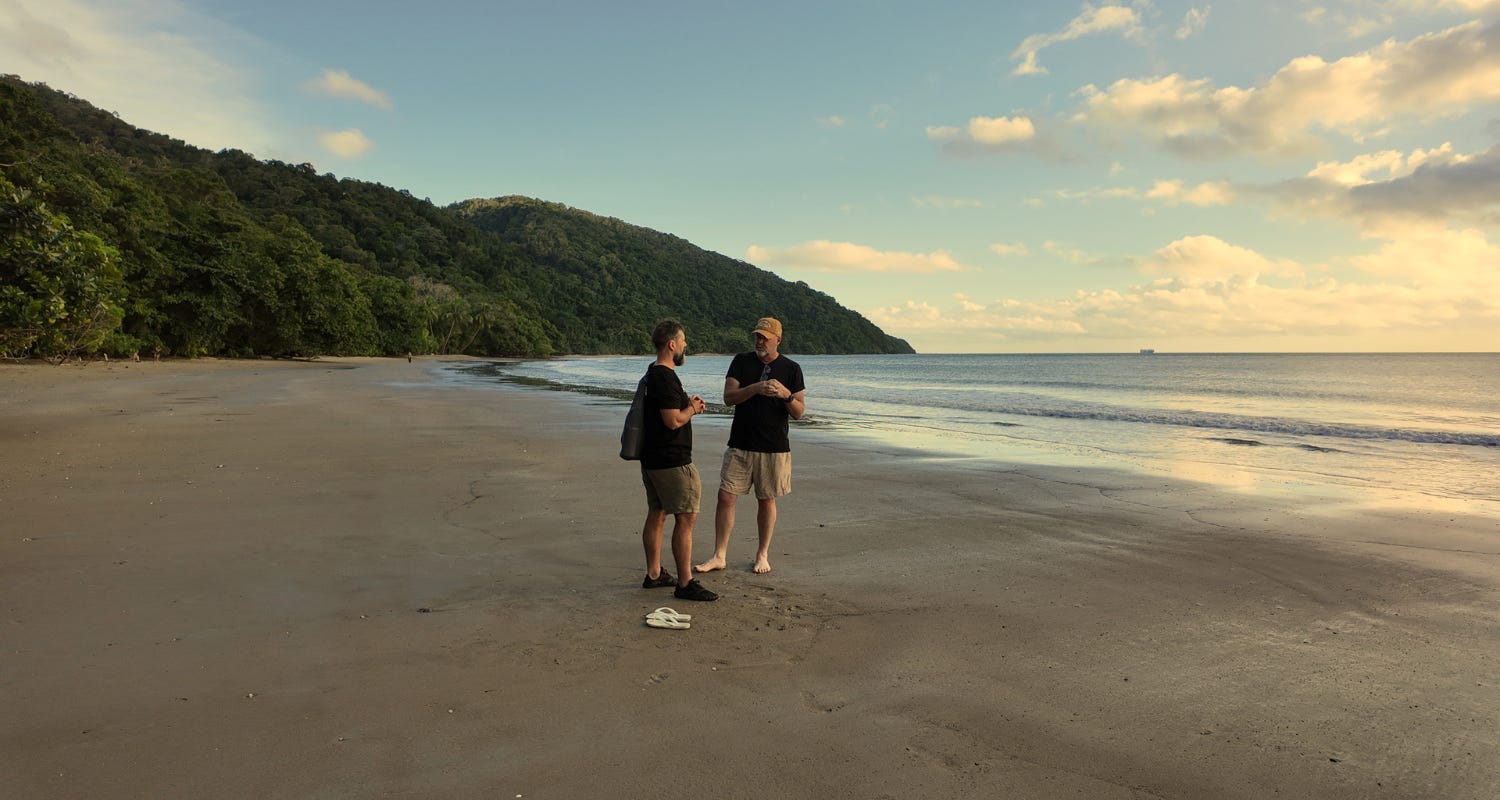
While we were up there, Trinity, a local Kuku Yalanji woman, was speaking with us on country when the rain started early. She paused, stepped away, and spoke quietly to the place around us, asking for the rain to hold off until we had finished talking. The rain stopped. When we sat down again, I asked her who she had been speaking to. She told me her ancestors, her aunties and uncles, were the earth, the land, the plants, the trees, and the ground itself. When a Kuku Yalanji person is buried on country, they become country. So when Trinity speaks to country, she is talking to family.
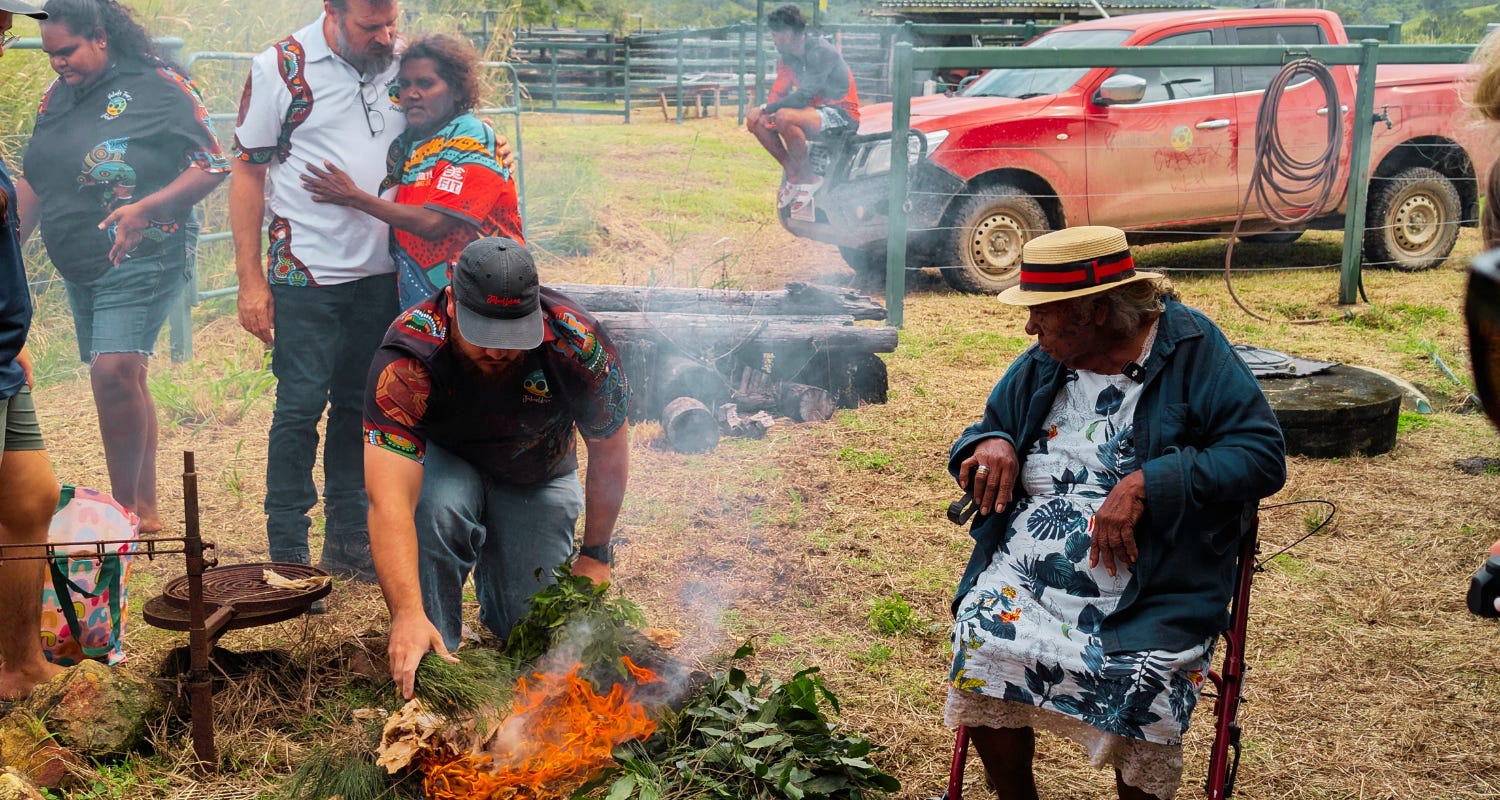
This is the same logic underneath a smoking ceremony. The plants are burned, you are being introduced to country through the kin who have become it. The welcome is literal, a handshake with a place that has memory. Smoking ceremonies serve several purposes, including cleansing of bad spirits, healing, welcoming visitors, and connecting with country by speaking to and acknowledging the ancestors.
Once you understand this, seven generations move from a concept to a relationship. The ancestors you are accountable to are present in the ground beneath your feet, in the trees you walk under, in the rain that does or does not arrive. The grandchildren you are designing for are already on the way to becoming country themselves. When we sit with that for a minute, most modern briefs about quarterly growth and product-market fit feel exactly as small as they are. Sure, important, but small.
I am not arguing that designing a smartphone is the same thing as caring for country. The two operate on different scales and serve different masters, with quarters on one side and millennia on the other. But the underlying lesson is the same. Anything we put into the world has the chance to outlive us, and we should design as if it would. Most of what we make today will not. Some of it ends up in the ocean, most of it ends up in landfill, and almost none of it ends up as something a child two hundred years from now will thank us for.
The lesson from Wujal Wujal is that thinking can scale. That we can apply seven-generation logic to a product, a policy, a campaign, a contract, or a brand (Circularity is critical here when things simply can’t last, can they be reborn?). The questions don’t change, only the patience required to ask them properly.
Run any modern brief through that filter, and most of them collapse on contact. Single-use packaging collapses, quarterly thinking collapses, and a surprising amount of what the industry calls innovation collapses. What survives is the work that was always going to matter, the work that contributes to a future somebody will actually want to live in.
This is the part I want you to hear, because I think the industry has hidden it from you.
You already have access to this kind of thinking, and you don’t need a workshop, a framework, or a five-step process to find your way to it. You don’t have to be Indigenous to practise it, though you should be honest about where it comes from. What you need is the willingness to ask a different question. The brief becomes a smaller question inside a bigger one: what does this place need from me, and what would my great-grandchildren say about the answer?
That second question is harder. It is also the question that produces work nobody has to apologise for in twenty years.
I don’t know what you make for a living. Whatever it is, it is creative work and a chance to listen better.
Products, policy, decisions about what gets bought and what gets thrown away in your house, all of it counts.
For my own part, coming back from country with Halfcut and my girls, I am going back to the drawing board. I am going to rewrite my values, take real time to understand country and the language that shaped this place before any of us got here, and continue my creative research on a deeper level. That research is about how creativity was industrialised in the first place, and how institutions, agencies, schools, and markets quietly took something that belonged to all of us and rebranded it as the talent of a few.
The work is about returning it. About restoring the belief that the systems you are working in, living in, breathing in, are yours to shape, and that creative agency was never the property of the industry that claimed it.
There is a good chance I may never get to meet Aunty Kathleen again. If I do, I will tell her how her story shaped me and what I learned from her in 30 minutes that no innovation lab or design school has ever come close to teaching me. I will thank her for her wisdom. Her words changed me, and that is worth honouring.
In the meantime, Aunty Kathleen will keep doing what her people have been doing for 60,000 years: watching the sky, telling the story, pointing at the trees. The hawk will keep circling. The black clouds will keep coming, more often now, with less warning each time. The country will keep speaking in the only language it has.
Our job is to learn how to hear it.
The most important creative practice of our time is not innovation, disruption, or the next sprint. It is the older and harder discipline of paying attention to a place long enough to deserve it.
We can start tomorrow.
Hi Ben, Great article and Congrats on your book!
I think 7 generations is too far-fetched, and we need to draw down a bit closer to home.
I was born in South Wales (UK), and it only took 2-3 generations of coal mining and steel making to destroy the land and people. Northern UK and parts of France are the same.
Interestingly, the Welsh culture had a strong oral history and observational cultural practice, but not as endearing and important as that of the first Australians.
Like you, I have worked in the design industry for over 20 years and now struggle with the current situation. You are right to look outside of the corporate hamster wheel for answers; there is much to listen to and learn from people who know better.
Many Thanks again, enjoying your thinking!
cheers
Anthony
This. Every day - this.